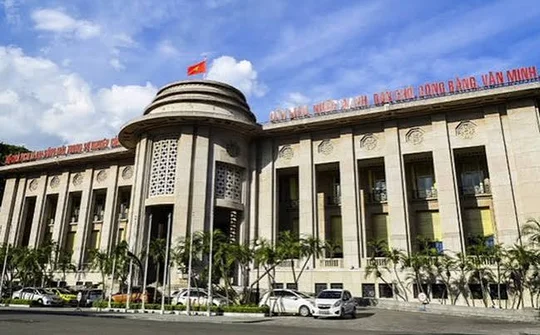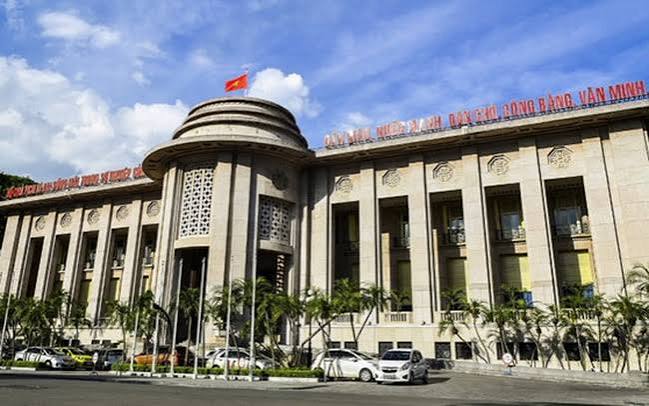

The Scheme was developed and will be implemented in accordance with the task assigned by the Party and the Government to the State Bank of Vietnam (SBV), in coordination with the Ministry of Finance, ministries, central and local authorities, and relevant agencies and organizations, as set out in Conclusion No. 18-KL/TW dated April 2, 2026 of the Party Central Committee on the five-year socio-economic development plan, national finance, public debt borrowing and repayment, and medium-term public investment for 2026–2030, in association with the objective of achieving “double-digit” economic growth; and Resolution No. 109/NQ-CP dated April 16, 2026 of the Government on updating and supplementing the Government’s Action Programme for the implementation of the Resolution of the 14th National Party Congress and Conclusion No. 18.
The Scheme is closely aligned with the Party’s guidelines and orientations set out in the Documents of the 14th National Party Congress; Conclusion No. 18; Resolution No. 57-NQ/TW dated December 22, 2024 of the Politburo on breakthroughs in the development of science, technology, innovation and national digital transformation; Resolution No. 68-NQ/TW dated May 4, 2025 of the Politburo on private-sector development; Resolution No. 79-NQ/TW dated January 6, 2026 of the Politburo on the development of the state sector; as well as directions issued by the Government and the Prime Minister in connection with the formulation of the Banking Industry Development Strategy to 2030 and the review and evaluation of the Scheme for restructuring the system of credit institutions in association with the resolution of non-performing loans for the 2021–2025 period.
The Scheme sets out five major guiding perspectives and three groups of specific objectives to be achieved by 2030, closely linked to the goal of achieving “double-digit” economic growth. It is also designed to be synchronized and closely integrated with the Ministry of Finance’s Scheme entitled “Comprehensive Reform of Vietnam’s Financial Market in Association with the Objective of Sustaining High Economic Growth through 2045,” which was recently approved by Deputy Prime Minister Nguyen Van Thang under Decision No. 1413/QD-TTg dated July 27, 2026.
Towards a modern, digitalized and globally integrated banking system
By 2030, the Scheme aims to transform the SBV into a modern, effective and efficient central bank, underpinned by advanced governance and digital data, while enhancing its capacity for policy formulation and implementation, analysis, forecasting, early warning and timely, data-driven decision-making. The SBV is expected to proactively adapt to trends in digital transformation, green transition and international integration.
The system of credit institutions is expected to operate in a sound, high-quality and efficient manner, with greater openness and transparency, underpinned by modern technologies and progressively aligned with international standards and practices.
For businesses, particularly small and medium-sized enterprises (SMEs), the Scheme aims to ensure that, by 2030, they have convenient, timely and appropriate access to financing that meets their production and business development needs, level of preparedness, and the specific characteristics of different business types, sectors and sizes. Notably, the Scheme sets a target of having at least 300,000 SMEs with outstanding loans at credit institutions by 2030.
For credit institutions, the Scheme aims to continue the formulation, approval and implementation of restructuring plans and plans for addressing weak credit institutions in accordance with regulations, while preventing banking failures or threats to banking safety from occurring beyond the State’s capacity to control. At the same time, the Scheme targets having at least three state-owned commercial banks among the 100 largest banks in Asia by total assets, based on rankings published by international organizations, and reducing the system-wide non-performing loan (NPL) ratio to below 3% by 2030.
Coordinated implementation of comprehensive solutions
To achieve these objectives, the Scheme sets out a comprehensive range of coordinated tasks and solutions.
First, the regulatory mechanisms, policies and legal framework will continue to be improved to facilitate the application of science and technology, innovation and digitalization in banking activities. The legal framework will also be studied and further developed to accommodate new financial service delivery models and emerging technologies, including artificial intelligence, big data, blockchain technology, cloud computing and other new digital technologies.
At the same time, the Scheme calls for the development of digital infrastructure and centralized databases, stronger data connectivity and sharing, enhanced information safety and security, and improved human resources and professional capabilities across the banking sector.
As part of banking modernization, the Scheme calls for continued reform of the monetary policy operating framework towards a more proactive and flexible approach, closely coordinated with fiscal policy and other macroeconomic policies, while strengthening analytical, forecasting and early-warning capabilities.
The national payment infrastructure will be modernized towards a centralized, unified, secure and interoperable system. The application of big data, artificial intelligence, cloud computing and other advanced digital technologies in governance, supervision and fraud prevention will also be strengthened.
Banking inspection and supervision will continue to shift significantly from a compliance-based approach towards risk-based supervision, combined with early-warning mechanisms and the application of data and technology.
For weak credit institutions, the solutions will focus on the formulation and implementation of restructuring plans; strengthened inspection, examination, supervision and early-warning mechanisms; enhanced governance, risk management and internal control capabilities; and coordinated efforts to address obstacles in debt recovery, NPL resolution and the disposal of collateral.
The Scheme also aims to develop the Vietnam Asset Management Company (VAMC) into an effective State instrument for addressing non-performing loans, thereby contributing to the development of a safe, transparent and sustainable market for distressed-debt transactions.
Another key priority is to enhance access to credit for businesses, particularly SMEs.
Accordingly, the legal framework governing credit activities will continue to be improved, while factoring services will be further developed. Credit institutions will be directed to improve their internal processes and diversify credit products to better match different types of businesses and their production and business needs.
The Scheme also calls for greater promotion of value-chain and supply-chain financing, as well as lending based on payment data, cash flows and other types of collateral permitted under the law.
In parallel, the application of technology and digital transformation in credit provision will be strengthened, procedures will be streamlined, and a database of SMEs will be developed. The banking–business connectivity programme will also continue to be implemented in order to promptly address difficulties and obstacles faced by businesses in accessing credit.
The SBV is assigned to take the lead, in coordination with ministries, sectors, local authorities and relevant agencies, in organizing the implementation of the Scheme and issuing an action plan. The SBV will conduct a mid-term review, undertake a final review and assessment of the Scheme’s implementation results in 2030, and report to the Prime Minister.
Decision No. 1809/QD-TTg shall take effect from the date of its signing.
SBV/translated by VNBA News