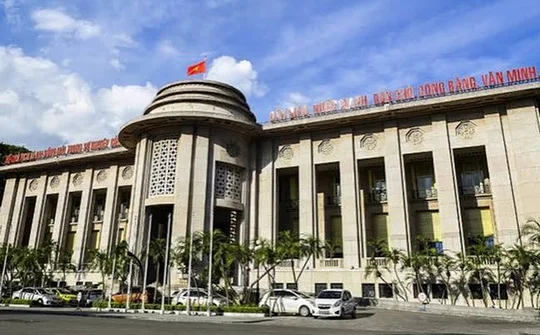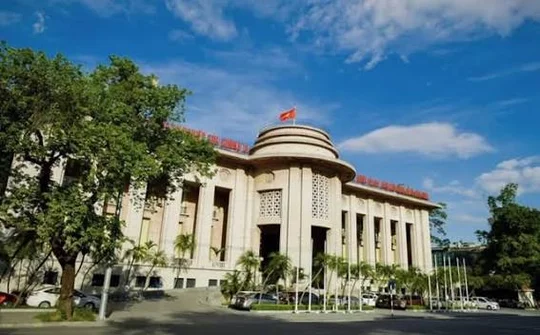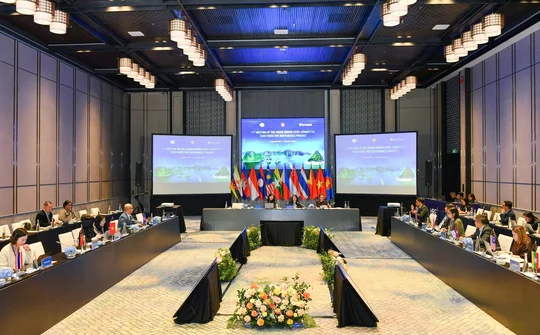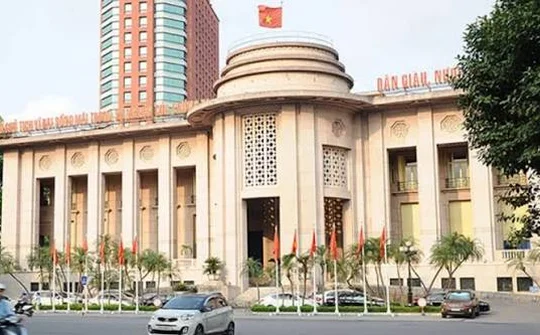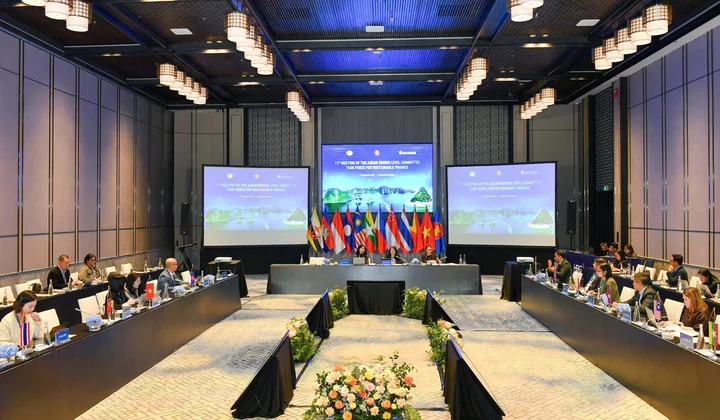

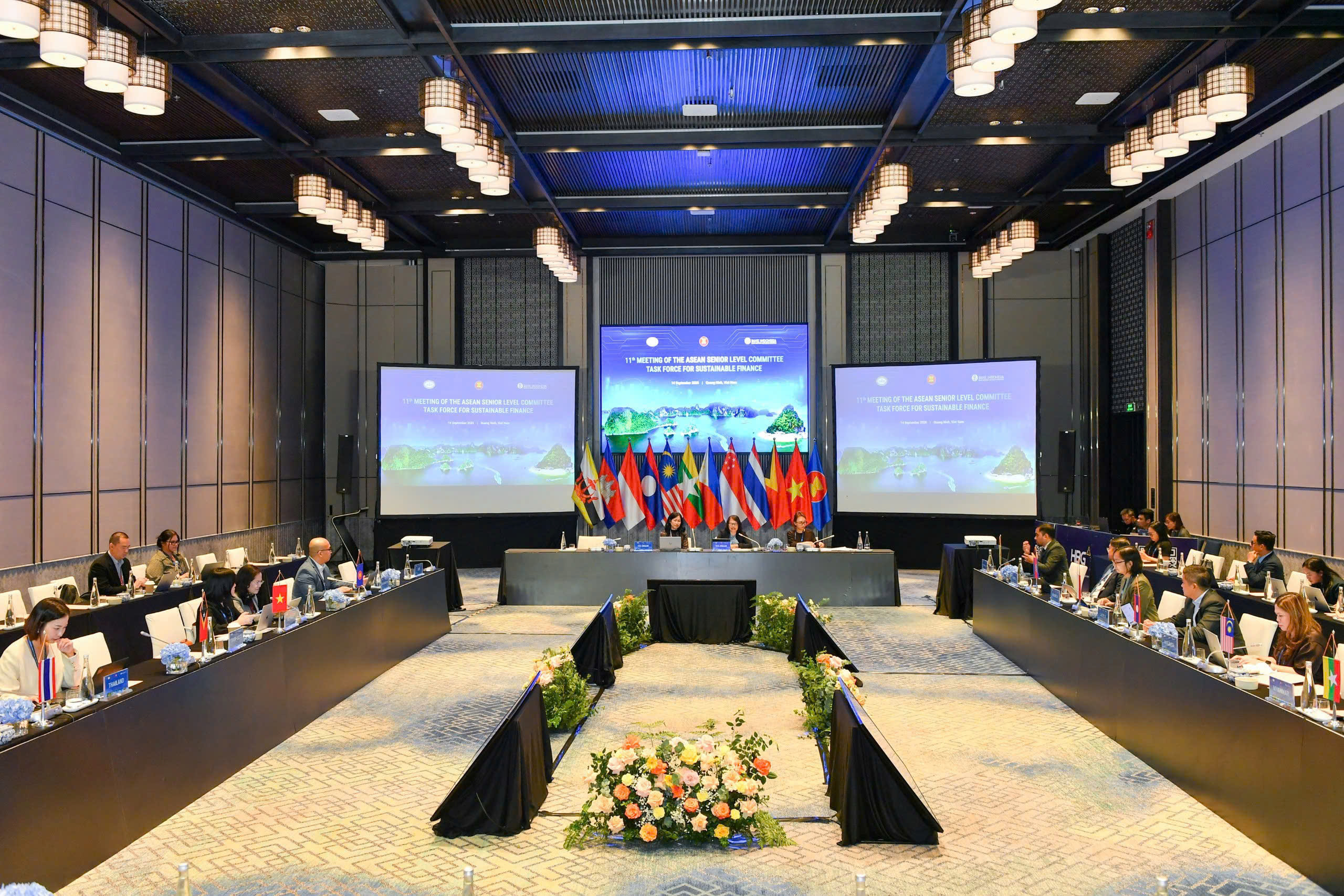
The meetings were co-organized by the State Bank of Viet Nam (SBV) and Bank Indonesia, at a time when ASEAN financial and banking cooperation is entering an important phase of institutional transition.
Advancing the ASEAN sustainable finance agenda
The 11th SLC-TF meeting brought together representatives from ASEAN central banks, the ASEAN Secretariat and other stakeholders involved in implementing sustainable finance initiatives across the region. The meeting provided an important platform for members to review progress, exchange experience and coordinate the implementation of regional initiatives aimed at advancing sustainable finance.
The meeting took place as the SLC-TF prepares to transition into a new phase under Project Revive, the ASEAN Financial Cooperation Reform Project. Accordingly, discussions focused not only on achievements to date, but also on how existing sustainable finance initiatives could be maintained and carried forward under the new cooperation framework.
During the 2024–2026 term, the SBV and Bank Indonesia have jointly chaired the SLC. Sustainable finance has been one of the key areas promoted by the two institutions and other ASEAN members under the regional financial and banking cooperation agenda.
Developing a common ground framework for climate risk stress testing
One of the key issues discussed at the meeting was the Common Ground Framework for Climate Risk Stress Testing (CRST) in ASEAN.
The development of a common framework is intended to provide a basis for ASEAN members to enhance the exchange of experience, methodologies and supervisory practices in assessing the impact of climate-related risks on the financial system. This represents an important development in the ASEAN financial agenda, as climate change is increasingly recognized as a factor that may affect banking activities, financial markets and overall financial stability.
From a risk-management perspective, climate risk stress testing enables financial institutions and supervisory authorities to assess the resilience of the financial system under different climate-related scenarios. A common regional framework can facilitate the sharing of data, methodologies and supervisory experience among ASEAN central banks while promoting greater consistency in the identification and assessment of climate-related risks.
Further Advancing the ASEAN Taxonomy for Sustainable Finance
Alongside the CRST initiative, the meeting also reviewed progress in implementing the ASEAN Taxonomy for Sustainable Finance.
The ASEAN Taxonomy is a key initiative aimed at establishing a common language for identifying and classifying sustainable economic activities across the region. Its continued development and implementation are important for mobilizing and allocating capital towards activities and projects that contribute to environmental and broader sustainable development objectives.
For the financial system, a consistent and credible taxonomy can help reduce differences in the way “green” and “sustainable” activities are understood and assessed across individual markets. It can therefore provide a stronger foundation for directing capital towards priority sectors while supporting regulators and financial institutions in progressively integrating environmental, social and governance (ESG) considerations into financial activities.
Together with other sustainable finance initiatives, the ASEAN Taxonomy is contributing to the development of a common foundation for a sustainable finance ecosystem in the region. ASEAN's sustainable finance agenda has also included the development of the ASEAN Green Map, which sets out a common vision among ASEAN central banks for a comprehensive sustainable finance ecosystem.
Ensuring continuity during the reform of ASEAN financial cooperation
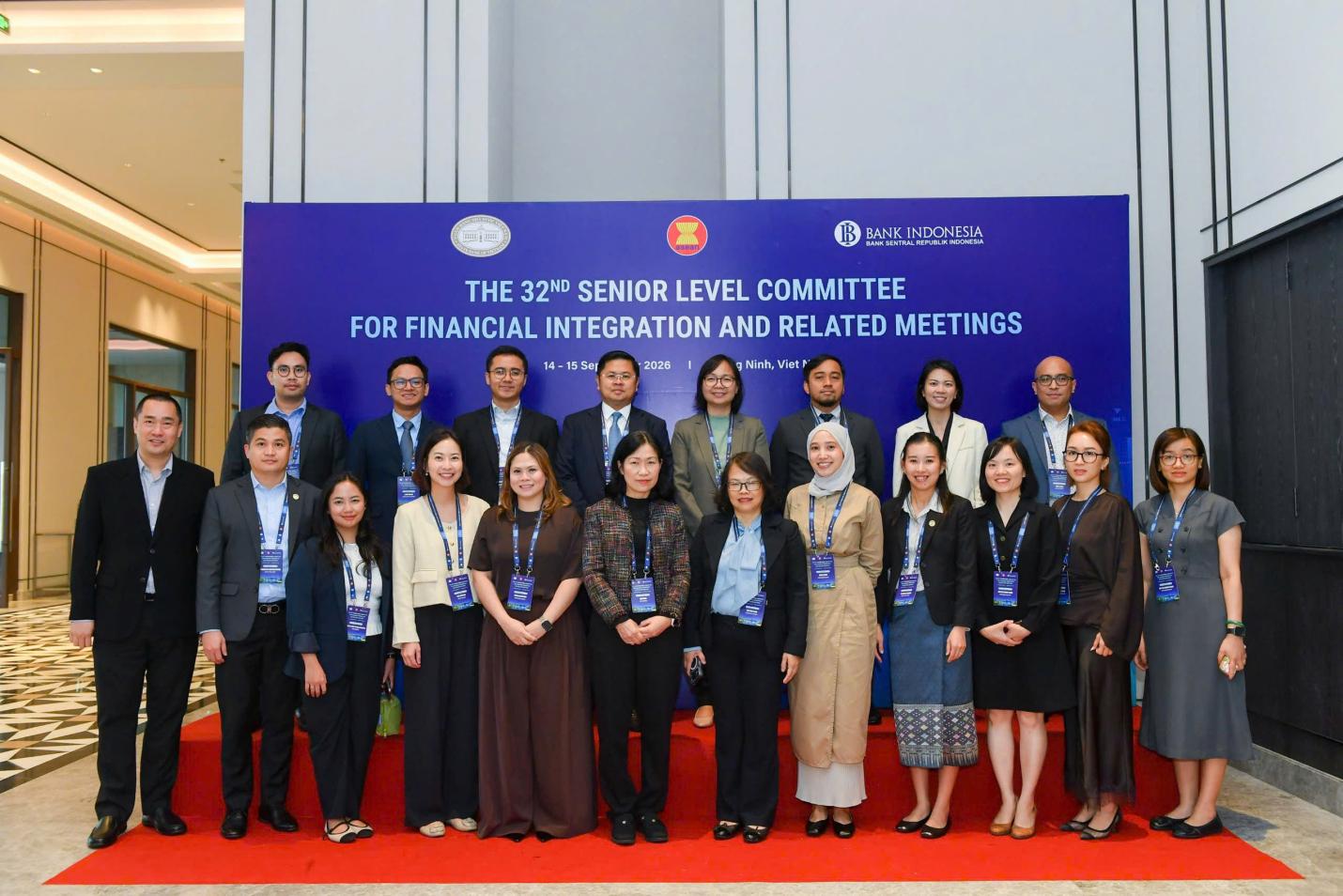
Another important issue discussed at the meeting was the review of the SLC-TF Progress Report to the 32nd SLC Meeting, together with arrangements for continuing sustainable finance initiatives after the SLC-TF concludes its work under the current institutional structure.
This issue is particularly relevant in the context of Project Revive, the initiative to reform ASEAN's financial cooperation architecture. The new structure is expected to be implemented from 2027, with the aim of streamlining and improving the effectiveness of ASEAN financial and banking cooperation mechanisms, reducing overlaps among existing mechanisms and working groups, strengthening coordination, and concentrating resources on priority areas.
The institutional transition therefore involves more than an organizational restructuring. It also requires ensuring continuity and effective succession for the cooperation outcomes and initiatives developed over recent years. This is particularly important in sustainable finance, where many initiatives are long-term in nature and require sustained coordination among central banks, financial regulators and other ASEAN stakeholders.
Establishing appropriate mechanisms to carry forward these initiatives after the SLC-TF's current structure comes to an end will help minimize disruptions to the ASEAN sustainable finance agenda and ensure that existing achievements are preserved and further developed under the new cooperation framework.
Strengthening the resilience of ASEAN's financial system
ASEAN's sustainable finance cooperation is gradually evolving from the development of common principles and policy directions towards more concrete tools for risk management, economic activity classification and capital allocation.
The advancement of CRST, the ASEAN Taxonomy and related initiatives demonstrates the growing attention of ASEAN central banks and financial regulators to the resilience of the financial system in the face of long-term challenges, including climate change and the transition towards more sustainable growth models.
For ASEAN, stronger regional coordination can provide a foundation for progressively harmonizing approaches, sharing experience and strengthening institutional capacity across member economies. Regional initiatives can also support the mobilization of financial resources for green growth, sustainable transition and greater economic resilience.
The SBV's and Bank Indonesia's joint chairmanship of the SLC during 2024–2026, together with Viet Nam's hosting of activities related to the 32nd SLC Meeting, further demonstrates Viet Nam's active participation in ASEAN financial and banking cooperation. It also provides an opportunity for Viet Nam to contribute to the development of regional initiatives, share its experience and promote priorities that are relevant to the evolution of financial systems across ASEAN.
As ASEAN moves towards a new cooperation structure from 2027, maintaining continuity in sustainable finance initiatives will be important to the effectiveness of regional financial integration. By building on existing achievements, strengthening coordination and concentrating resources on long-term priorities, ASEAN can continue developing a more resilient financial system that is better positioned to support sustainable growth and the economic transition of its member states.
VNBA News