
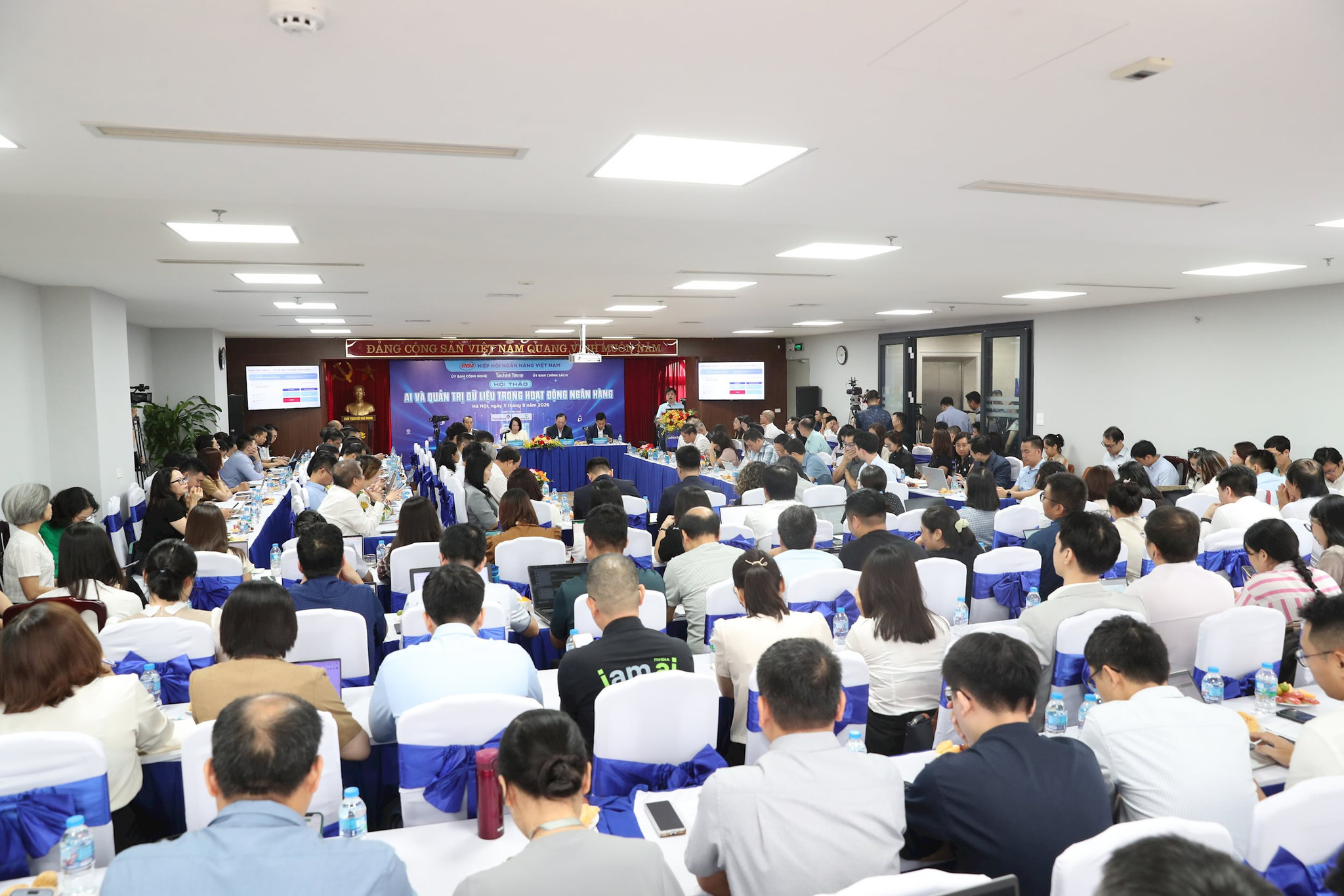
In his opening remarks at the workshop, Dr. Dao Minh Tu stated that the event, jointly organized by the Technology Committee, the Policy Committee, and the Financial and Monetary Market Magazine of VNBA, aimed to create a forum for exchanging ideas on the safe and sustainable development direction of the credit institution system in the face of the next generation of technologies.
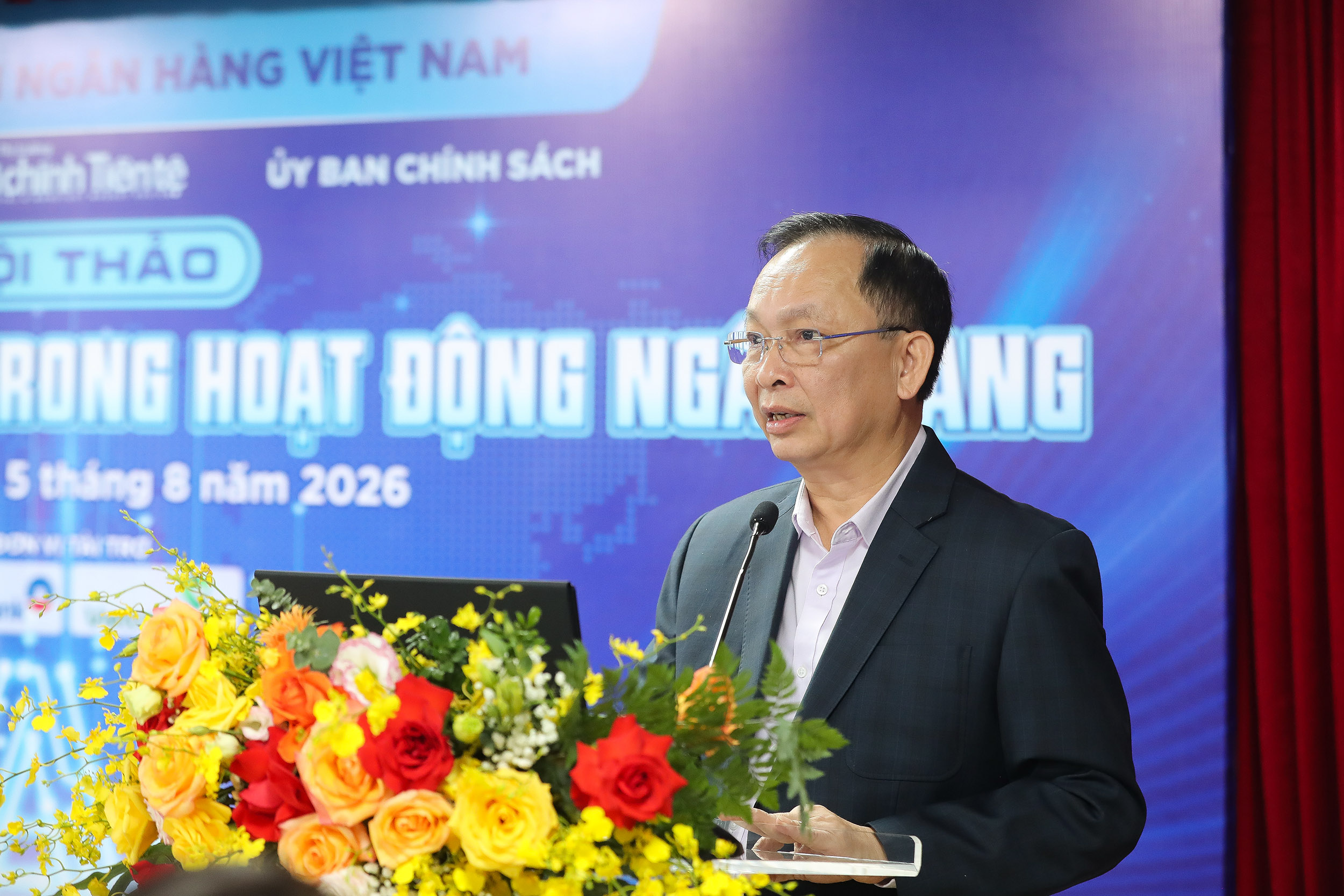
Dr. Dao Minh Tu, Vice Chairman cum General Secretary of VNBA
According to Dr. Dao Minh Tu, the global finance and banking industry is witnessing a shift from the digital age to the AI age, moving towards AI-native banking. AI is no longer limited to chatbots or automating repetitive processes but is directly involved in core activities such as trade finance, cross-border payments, and asset management. This technology also helps personalize the customer experience and promote financial inclusion by leveraging behavioral data to expand risk assessment capabilities, thereby helping more customers who do not meet traditional credit standards access legitimate sources of capital.
Data quality determines AI capabilities
Dr. Dao Minh Tu emphasized that AI and data have an organic, inseparable relationship. When data is fragmented, inconsistent, or its source is uncontrolled, algorithms will inherit and amplify biases, leading to biased decisions, affecting customer interests, and increasing non-financial risks for banks. He stated that international practice shows that an ineffective data governance platform can cause organizations to waste an average of 30% of their working time.
According to him, governance thinking needs to shift from a passive compliance model to AI-enhanced data governance, built on three pillars: governance serving AI, governance by AI, and governance of the AI models themselves.
“The current digital banking race is no longer a race in algorithms or the scale of technology investment, but a race in data quality, comprehensive governance capabilities, and customer digital trust,” Dr. Dao Minh Tu stressed.
Completing the legal framework for AI in banking
Regarding the legal framework, Dr. Dao Minh Tu stated that Vietnam is gradually improving regulations to align with international standards, with important laws already enacted including the Law on Digital Data, the Law on Personal Data Protection, and the Law on Artificial Intelligence, along with guiding documents.
According to the Law on Artificial Intelligence, AI must serve humanity, be human-centered, and not replace human responsibilities. For the financial and banking sector, which falls under the category of high-risk AI applications, organizations must conduct AI impact assessments, establish human oversight mechanisms, control model shifts, and track the entire operational process for post-audit and algorithmic auditing.
Dr. Dao Minh Tu added that the State Bank of Vietnam is finalizing a circular regulating safety, risk management, and conditions for deploying AI applications in the banking industry, aiming to concretize technical standards in operation.
VNBA News